Photobooths, Four Chances, and the Happy Accident
In a world of unlimited images, the photobooth gives us a short sequence, a physical object, and enough unpredictability to make the experience matter.
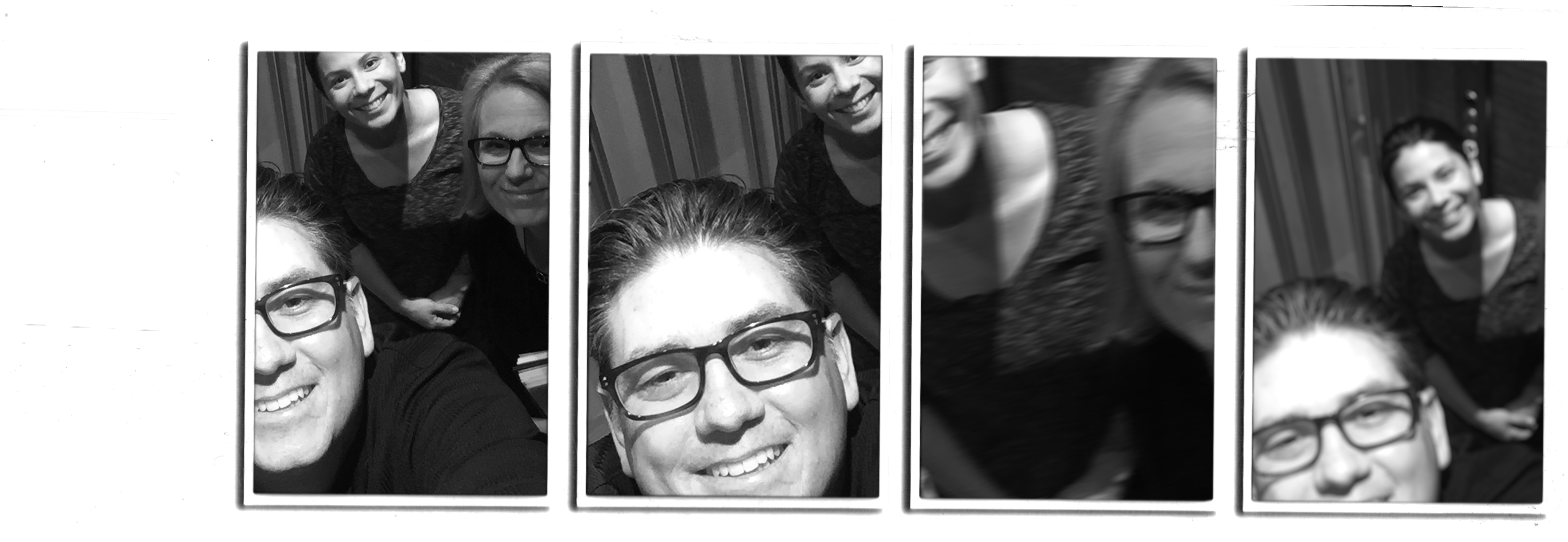
I am a photographer first. Most of my commercial work depends on control. We think about the light, the background, the expression, the timing, and where the picture needs to go when it is finished.
A photobooth does almost the opposite. The camera is fixed. The space is small. A countdown starts whether everyone is ready or not. Then you get four chances.
That difference matters now because photography has become almost unlimited. You can take two hundred pictures and delete one hundred ninety-nine. You can correct the timing, replace the expression, smooth the skin, remove the distraction, or keep working until the photograph is technically perfect.
In the booth, the picture commits itself. It comes out before you have time to make it into something else.
“you get four chances and it comes out and it’s not a perfect thing, but the act of doing it makes it something special.”
The booth is not only making a picture. It is creating a small event. People squeeze together. They negotiate where to sit and what to do with their hands. Someone misses the countdown. Someone laughs at the wrong moment. Then everyone gathers around the strip when it appears.
That ritual cannot be recreated by putting a photo-strip filter on a phone picture. The filter can imitate the look. It cannot reproduce the pressure of the countdown, the shared performance, or the object at the end.
The Happy Accident
Photography has always depended on a mix of control and accident. Careers were made on happy accidents. A gesture happened at exactly the right time. Light hit something nobody had planned. A subject looked away, and that became the frame with the most life in it.
Digital tools give us remarkable control, and I use that control every day. But control can also make us suspicious of anything that does not look finished. The photobooth gives imperfection a protected place. The blink stays. The bad timing stays. The expression between poses stays.
Sometimes that is the photograph people keep because it feels like what actually happened.
Discovery Instead of Nostalgia
The renewed interest in photobooths is often described as nostalgia. That may be part of it, but nostalgia is not quite the right word for people who did not grow up with the original experience.
I think discovery is a useful way to understand part of the attraction for younger photographers and image-makers. A process with limits, delay, physicality, and an outcome you cannot completely control can offer an experience you have not had before. Film photography can have a similar attraction. The process asks you to make a decision and live with it long enough to see what happened.
That can feel fresh in a visual culture filled with AI images, heavy retouching, and photographs designed to look finished before they have had a chance to feel real.
The physical strip matters too. It can bend, fade, get taped to a mirror, disappear into a wallet, or turn up years later. It has a life beyond the camera roll. Even when someone photographs the strip and shares it online, the digital post points back to a real object and a shared moment.
Four Chances
The appeal of the photobooth is not that it makes a better technical photograph. It is that the limits change how people behave while the photograph is being made.
Four chances are enough to create anticipation. They are enough to make people collaborate. They are enough to leave room for the happy accident.
The picture may not be perfect. The experience can still make it worth keeping.